How Zaha Hadid Architects Used Natural Elements in Japan’s First Vertex Hotel
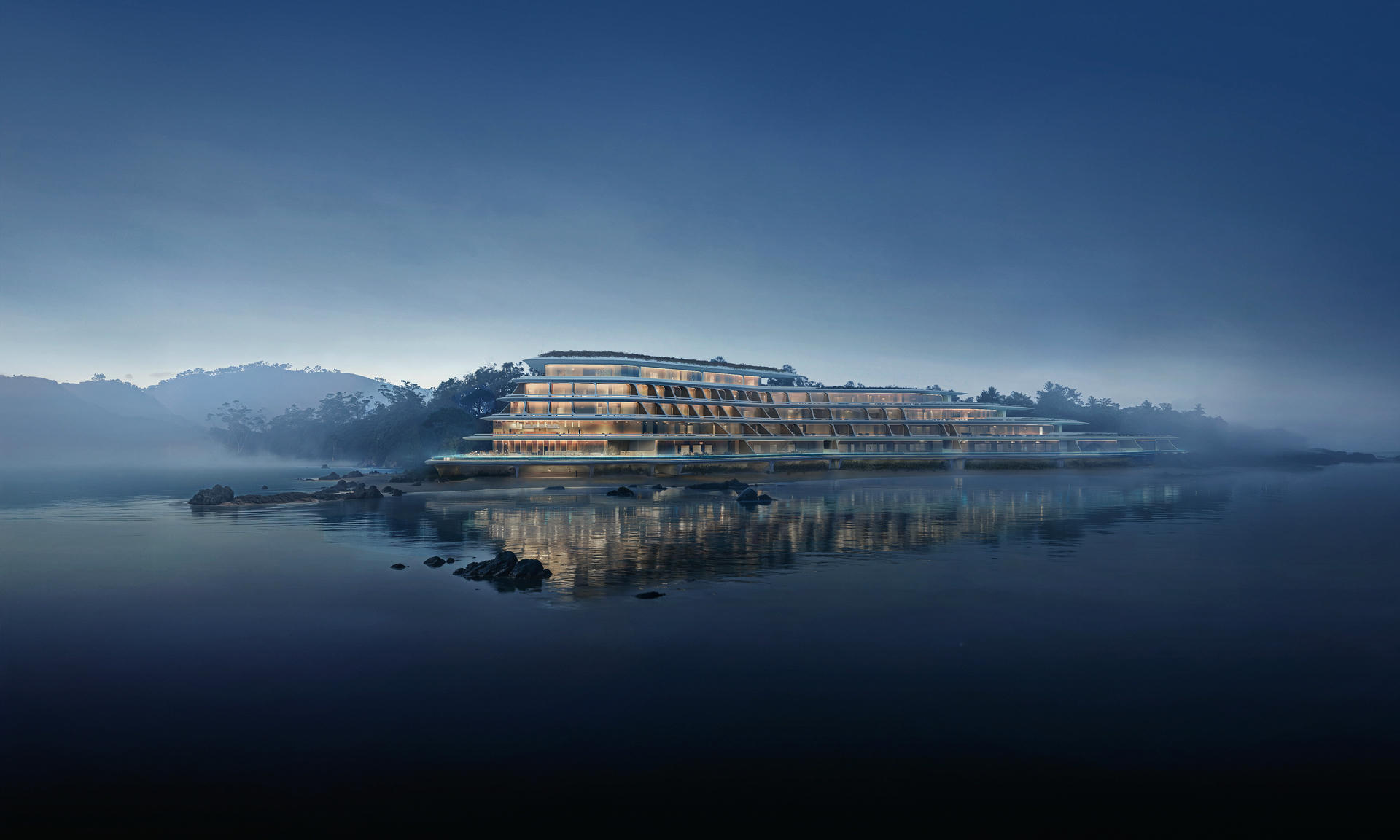
Zaha Hadid Architects will design the first vertex hotel by NOT A HOTEL, to be built on the island of Okinawa. Situated between a subtropical forest and the ocean shoreline, the project is conceived as an architectural response to the region’s complex geology and ecosystem.
The vertex hotel by NOT A HOTEL, designed by Zaha Hadid Architects, continues the studio’s long-standing relationship with Japan, initiated four decades ago with a series of internationally acclaimed projects inspired by the country’s landscape, urbanism, culture, and craftsmanship.
The hotel will be set on a site of over 25 m2, located between the waters of a bay with sandy beaches and a steep, forested slope. From the outset, the project has been developed with the aim of minimizing intervention in the natural environment.
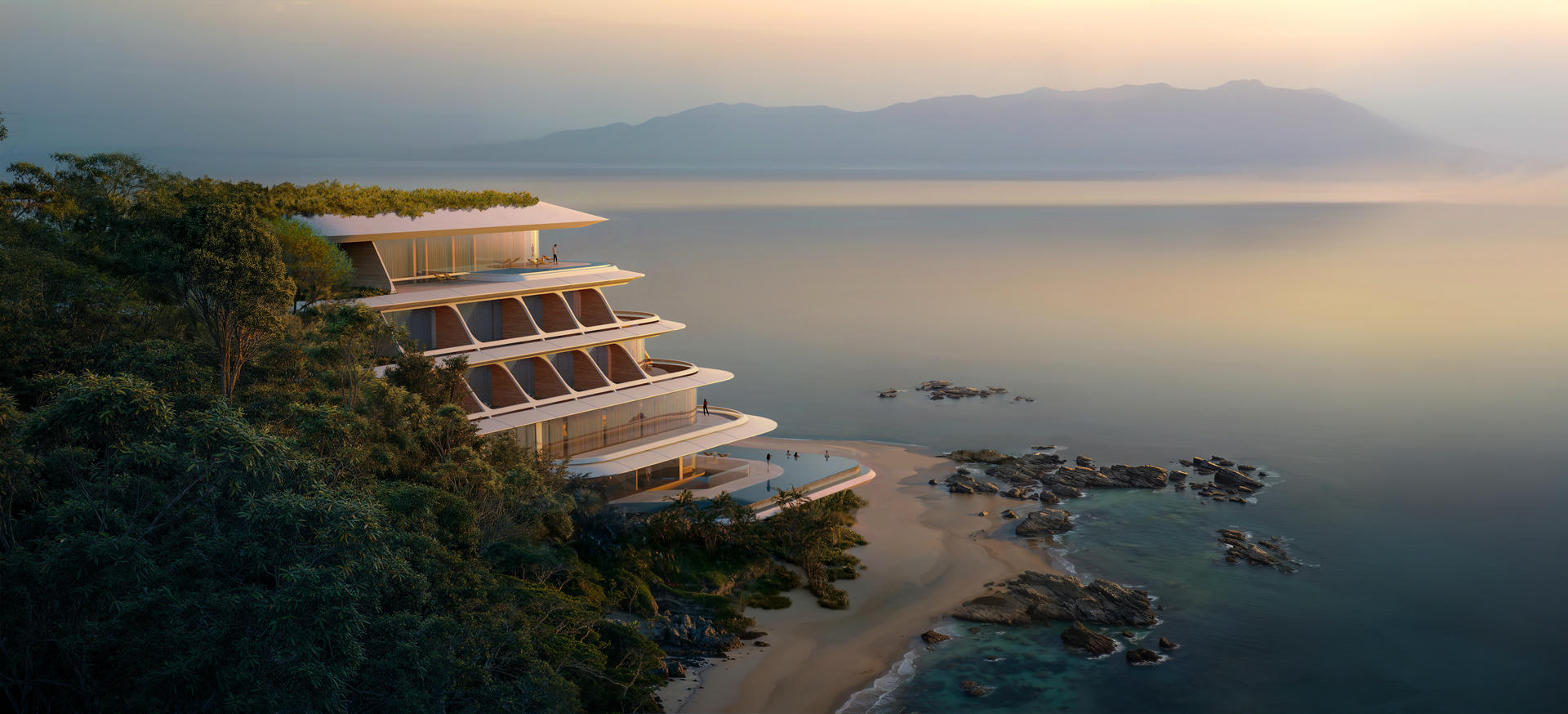
The architectural concept proposed by Zaha Hadid Architects derives directly from the site’s topography and the limestone formations found here, composed of Pleistocene coral reef deposits dating back approximately 400,000 years.
In accordance with guidelines issued by the local forestry commission, marine conservation experts, and local authorities, the building has been designed to hover at least 6.5 meters above the ground at the interface between forest and beach. This approach significantly reduces the building footprint within both ecosystems and helps preserve the area’s biodiversity.
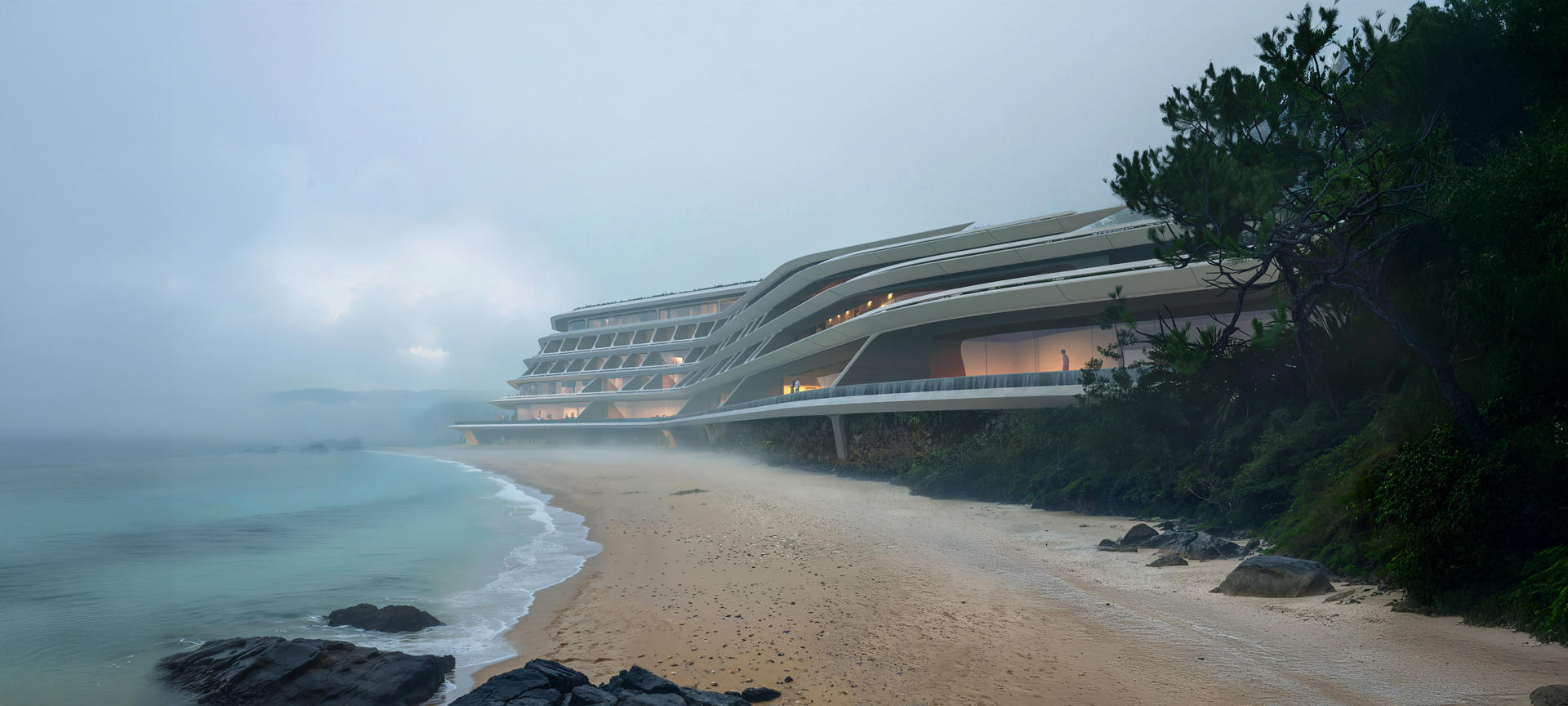
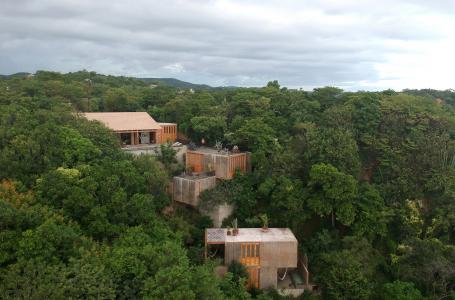
The hotel’s form follows the coastline, creating a sequence of horizontal, terraced levels, courtyards, and gardens that reflect the local topography. The layout and materials were selected based on detailed climatic and environmental analyses—temperature, humidity, rainfall, winds, solar exposure, air quality, and variable land and marine conditions were monitored throughout the year and translated into advanced digital models.
The result of a twelve-month solar analysis is a series of distinctive cascading canopies that extend beyond the building’s volume. These form a system of sheltered terraces that emulate the natural terrain and descend toward the shoreline. They also represent a contemporary interpretation of the deep eaves and pronounced overhangs characteristic of traditional local architecture.
The building’s form also harnesses summer winds blowing inland from the ocean, supporting natural ventilation throughout all spaces.

The project draws on Okinawa’s architectural traditions, highlighting the craftsmanship of local artisans and the quality of regional materials. Interiors and details will be enriched with intricately carved Okinawan pine, limestone from nearby quarries, and ceramics produced in local workshops.
The modular structure and façade systems will be made from prefabricated, precisely engineered concrete elements whose texture and color reference the light coral sands of the beaches. The concrete will incorporate recycled aggregates sourced from demolished buildings on the islands.
More:

Suggested for you
-

Iconic Motifs of Stella McCartney in the New H&M Collection
Nearly 20 years after their first collaboration, H&M is once again joining forces with Stella McCartney. The new edition of this partnership will go on sale on May 7 and, as the brand emphasizes, is a clear nod to the designer’s history.
-

Jewelry to help keep the headphones on
Wireless headphones are certainly more comfortable than classic ones, on a cable: especially during sports. On the other hand, not all of them are suitable for every ear structure, and they can fall out easily in certain situations when moving. At such...
-

Out on the road, just like on the tennis court, I keep an eye on my technique - an interview with Iga Świątek
”I must admit that what I have achieved so far goes beyond all the dreams I had,' says Iga Świątek, the world number one in women's tennis, an impressive classy ambassador of Poland in the international arena and an icon of the young generation....
-
The cover of the Italian "Vogue" is empty
The Italian edition of the "Vogue" magazine is one of the most important magazines in the fashion world. Its covers are always a great inspiration for all fashion and photography fans. This time, however, the cover of the famous magazine is......