Is It Me Watching the Loop, or the Loop Watching Me? A conversation with Mario Ruggiero, whose work will soon be shown at the Kinomural festival
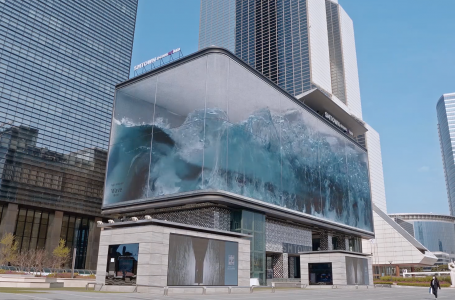
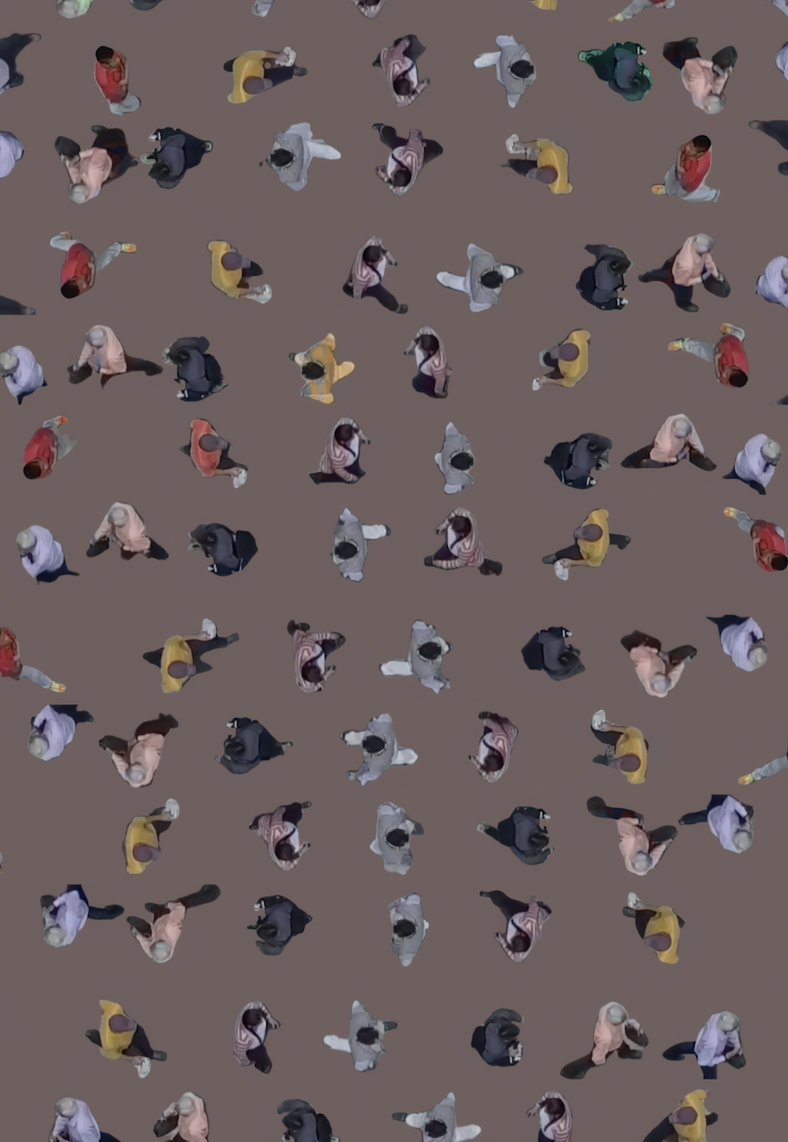
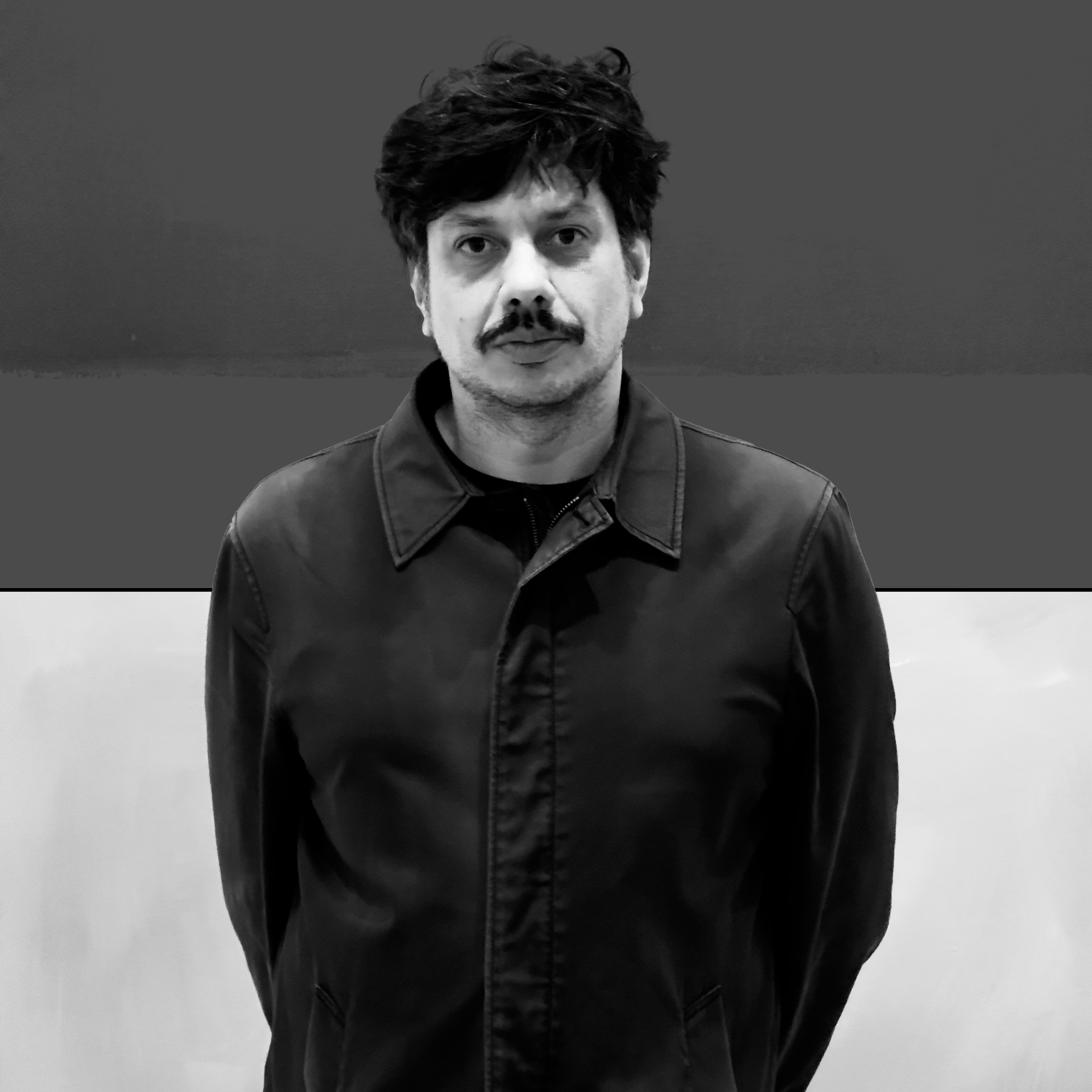
Mario Ruggiero works at the intersection of image and time – his video installations take a single, often dramatic moment and let it run into infinity, until it stops being what it once was. The artist has already collaborated with the likes of David Cronenberg, Brian Eno, and Peter Greenaway, and now he'll be showing his work at Wrocław's Kinomural – one of Europe's most significant new media art festivals, whose theme this year is Endless Circulation. On this occasion, we spoke with him about loops, time, and why less is more.
Article is sponsored
Mario, as a new media artist showing your work at Kinomural, what was it about this festival that made you want to bring your art here and what does it feel like to show your digital universe out into a public city space?
I think Kinomural is one of the most important festivals out there for people working with images and what we call visual art. It's not the first time I've shown my work, but the idea of seeing something on a huge wall that I might have made alone, in the dark, at five in the morning, is pretty amazing. All the things I've absorbed over time, images, ideas, things I've seen or experienced, and then turned into loops suddenly leave the studio and take over a public space. For me, that's incredible, and I'm really curious to see what happens to the work once it's outside the context where it was created. What interests me most is the way people experience it. I'm used to having a relationship with an audience through a screen, views, likes and numbers. Here, there will be actual people standing in front of the work. I want to see if they stop, how they react, if something happens. A real reaction, even a small one, means something completely different to me than a like. I'm also really happy to have been invited. When I saw the other artists involved, many of whom I really admire, I felt genuinely proud to be part of it.
This year's festival theme is Endless Circulation. What does this phrase mean to you personally as an artist?
For me, loops are a kind of refuge. A way of taming chaos and turning even the most violent images into something strangely protective. Or, on the contrary, putting them under a microscope and looking at what they might really mean. Removing the shock and trying to see the pattern behind an event. I think endless circulation should really be understood as an event itself. When the needle of a record gets stuck, we keep hearing the same musical pattern repeating, but the real event is that moment when time seems to stop, that little glitch. That's where things become interesting, because for a moment time takes on a different dimension, almost as if we were looking at it through a microscope. We can start to see its structures and the structures behind them. This way of thinking is also very close to the work of an author who has deeply influenced me, J. G. Ballard. In his novels, trauma isn't necessarily something you overcome. It can become a landscape you inhabit, a system that reorganizes itself around its own fractures, repeating them until they become empty, or, on the contrary, until they become even more visible.
In your installations, you take a dramatic moment and repeat it endlessly. Why do you prefer to loop a single moment instead of telling a full story with a beginning and an end?
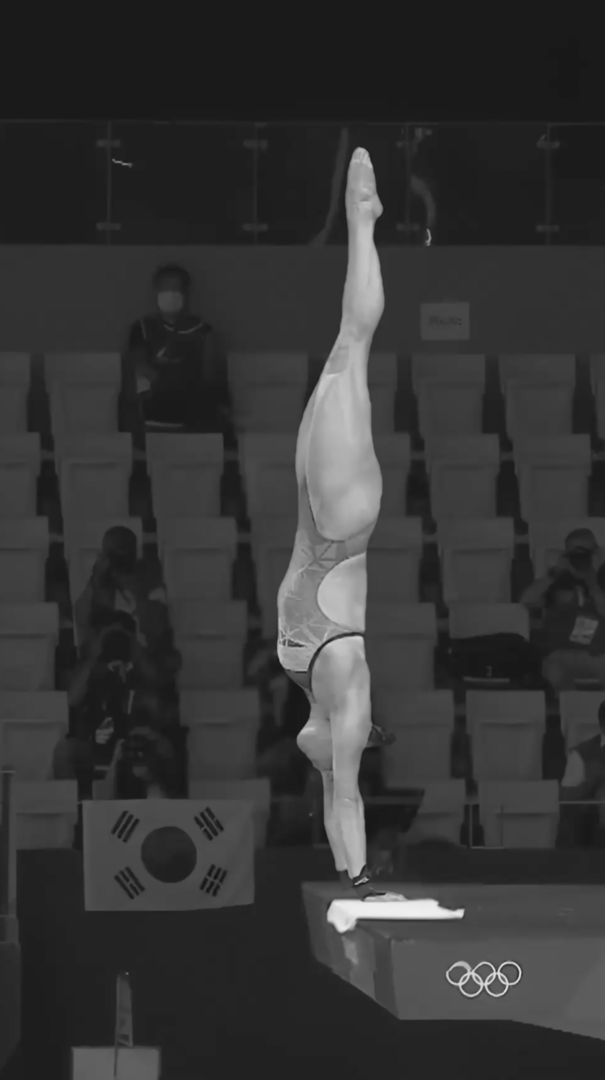
An isolated moment stops being a fragment of a story and becomes something of its own, and that's one of the things I find most fascinating about the loop. Repetition can be a comfort zone, if we let ourselves be carried by it, like being gently rocked by the constant movement of the sea. But if we realize that we can never get out of it, the same repetition becomes disturbing. I'm very interested in that contrast. I often think of my loops as a kind of short circuit, as if the space time system has gone wrong because we've overstimulated it. In that sense, I also see them as a form of storytelling: fragments of an imaginary world that somehow got caught inside a space time glitch.That said, I'm also very fascinated by the idea of telling a proper story, and I definitely don't rule out doing that in the future.
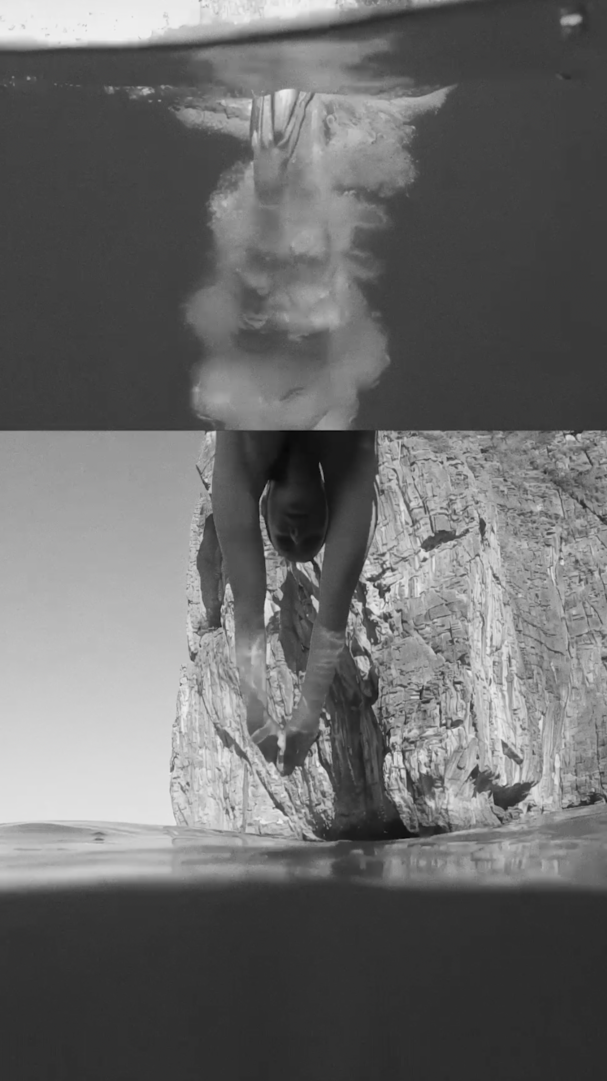
What does your process look like from start to finish? How do you take a simple idea or raw video clip and turn it into finished artwork?
I usually wake up very early and, after coffee, I sit down at the computer. I listen to a lot of music, mostly electronic and ambient, and while I'm listening I look for images that might have something interesting in them. Very often, it's the combination of those two things that makes something click. Music is usually what starts the whole process. Then I open After Effects and put together a first draft, which is often a complete mess. From there, I start pushing the images as far as I can, just to see how far they'll go and whether I can find a loop that has something. If it works, I keep going. If it doesn't, it goes into a folder of ideas to maybe look at again later. Over time I've realized that everything can influence something else. An idea that doesn't work on one image might become really interesting when you apply it to another one, so I often go back to things I rejected months before. I also have a few terabytes of material that I've collected over the years. So I guess insomnia has been pretty useful in that sense. I don't really have a specific moment when I decide a piece is finished. At some point, I just realize that I've been staring at it, completely absorbed. Usually, that's the moment.
Kinomural happens in a noisy, open city environment. Is your work designed with a specific soundtrack or do you rely on the visual rhythm?
Music is really important in my work, but maybe even more important are sounds and noises. In the works I call Time Geometry, for example, I layer the same sound over itself several times, intentionally creating a pattern that suggests some kind of shift in space and time. These works try to show time as a sequence of events happening in space. It's a physical thing, and sound is physical too. I'd actually be very happy if the noise of the city mixed with the noise I've created, if some kind of dialogue happened between the two, maybe even a slightly destabilizing one. In that case, I wouldn't want the sound of my work to isolate it from its surroundings. I'd rather it wrapped around the environment and somehow changed the way you perceive what's happening around you.
When people stand in front of your work on the streets of Wroclaw, what emotional or physical reaction do you hope to trigger in them?
My work is very connected to the idea of time, so more than anything I'd like to make people think about time. I'd like someone to wonder: "I'm standing here watching a video that keeps repeating. Am I wasting time? Am I stopping it? Or am I somehow entering it?" I'm also interested in something called semantic satiation in psychology, when you repeat a word so many times that eventually it loses its meaning and almost becomes just a sound. I think something similar can happen with images. Repetition can push them towards a kind of abstraction, making us temporarily lose their original meaning and revealing the dynamics hidden inside an event. And then, of course, I'd like people to actually enjoy the videos. That too. Maybe especially that. :)
I think that almost everyone in the crowd will pull out their smartphone to film your project. How do you feel about capturing a loop of your loop on their screens? Does it ruin the physical experience, or does it give the artwork new life?
So, let's think about it: the work is filmed, created, published and experienced on a smartphone. Then it gets shown on the side of a building, filmed again, and published again, only to be experienced once more on a smartphone. I'd say that's basically a loop. On one hand, I really like the idea that the work can have a new life through being recorded. Documentation is important, and I'm happy that it exists, because it allows the work to keep circulating after the event is over. On the other hand, I have to admit that if I saw most people watching my video without a phone screen in front of their faces, I'd consider that a huge success. So I'd probably film that myself, just to document the fact that it happened. And then we're back to… well, let's think about it.
Technology and new media are changing faster than ever. Looking ahead a few years, where do you see video art going and how do you see your own practice evolving alongside new technologies?
We've reached a strange situation. Technologically, we keep moving forward, while culturally we often seem to want to go backwards. We rediscover film, Polaroids, analog cameras, maybe because we're trying to recover a relationship with images that we've somehow lost. At the same time, we're afraid of stopping, because it feels like the train keeps accelerating. Today we have incredibly powerful and accessible tools. We can make images, videos, music, 3D worlds and, with AI, things that just a few years ago would have required studios, budgets and dozens of people. That freedom is amazing, but it can also create a kind of paralysis. When everything is possible, it becomes harder to understand what we actually want. And, paradoxically, we can all end up looking more similar, using the same tools, the same models and the same generative systems. I hope video art can move away from that kind of standardization by pushing technology and forcing it to do things it wasn't really designed to do. I like the idea that it can create new languages, even ones that are difficult to understand at first. What I try to do is not let myself get too comfortable with the tools I have, but instead break them, push them until they glitch, and see what happens. It's a bit like when I was a kid and had a remote control car. I found it much more fun to crash it, take it apart, put it back together and try to make it work in some completely ridiculous way than to actually drive it normally. In the future, for example, I'd like to see how far I can reduce video to the absolute minimum while still keeping it understandable. A bit like taking the vowels out of a sentence: Whn y r mv th vwls frm sntnc, y cn stll ndrstnd wht s wrttn. I'd like to tell a story that works like that but with the images, reducing it to the bare minimum just to push the limits of intelligibility.
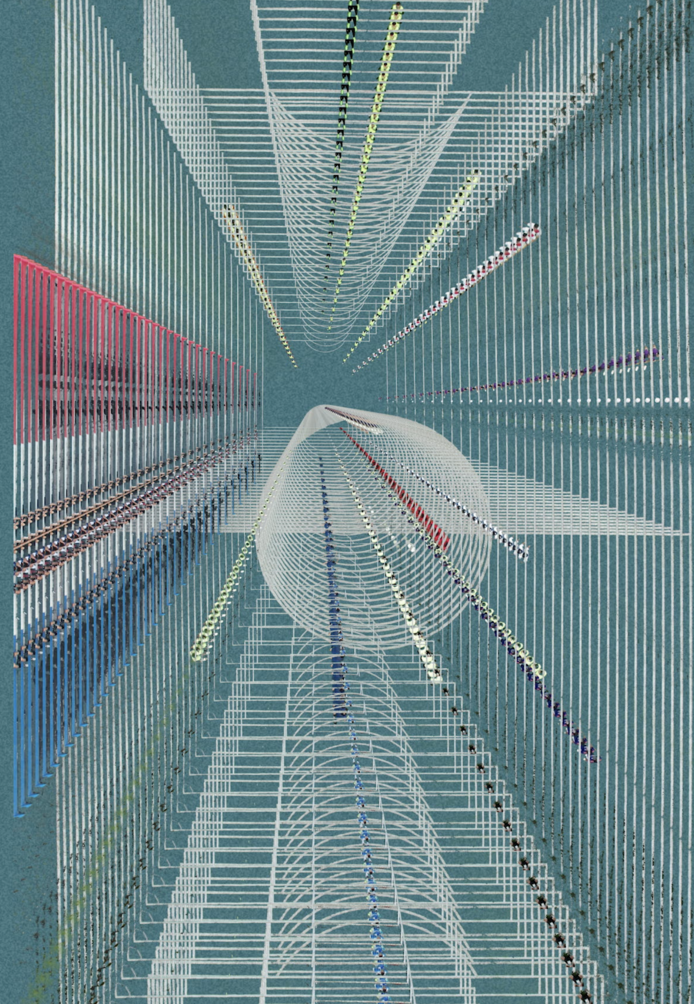
If you had to choose just one moment from your own life to watch on an endless loop, what moment would that be?
I'd probably choose the exact moment when a loop finally works. After spending hours tweaking it, there's this moment when I stop thinking about how to make it better and just watch it. It's kind of a little glitch in my head: for a few seconds, I'm not sure if I'm watching the loop, or if the loop is watching me.
You can follow further festival announcements and preparations on social media: Facebook, Instagram, and at www.kinomural.com.
Kinomural. New Media Art Festival September 18–19, 2026, 7:30 PM – 10:00 PM Wrocław Free admission

Suggested for you
-
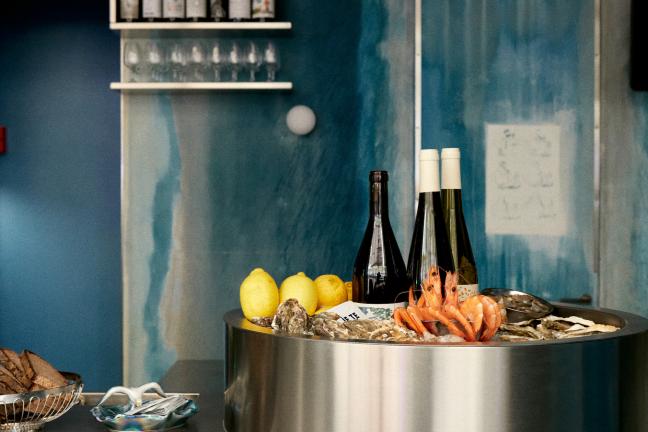
Citrons et Huîtres - contemporary Paris inspired by Renoir
Place Pigalle is one of the liveliest places in Paris. It is here that a place famous for its delicious oysters - "Citrons et Huîtres" recently opened its doors. Its name is inspired by the painter Pierre-August Renoir associated with this neighborhood...
-
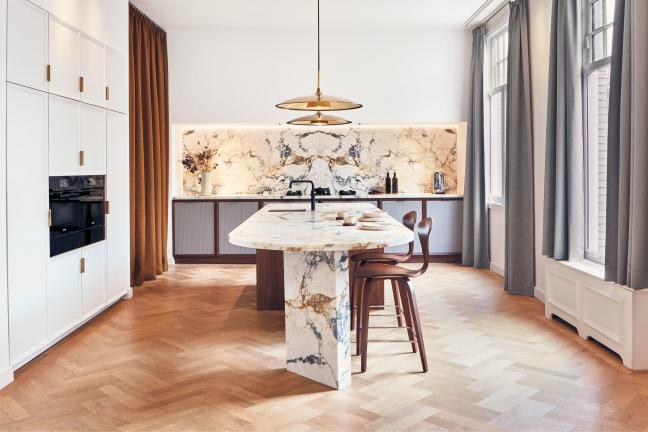
Cozy elegance
Today we invite you to a stylish apartment located in Amsterdam. The 34 South studio is responsible for its design. The interior is not only extremely elegant and filled to the brim with perfect design, but also very cozy.
-
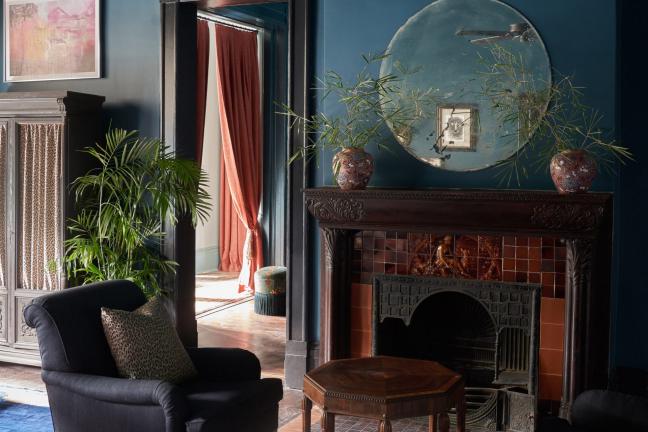
The madness of Sarah Ruffin Costello
This unique hotel impresses with its crazy interior: on the carpet we can see the alligator motif, the walls are kept in intense colors, and in almost every corner we can see real design gems. The designer Sara Ruffin Costello is behind this madness.
-
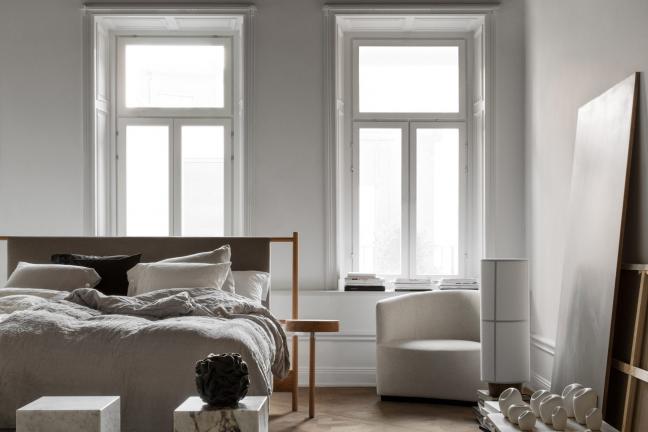
Sculptor's apartment in Stockholm
The Copenhagen studio Norm Architects in collaboration with the Danish brand Menu and the Dux company has created a unique project for Stockholm Design Week. A four-room apartment in the heart of Stockholm was arranged as an artist's apartment.